Deana Stroisch
A Springfield alderman is questioning a proposed agreement that gives developers of 17 acres at Jefferson Street and Veterans Parkway $9.2 million in tax increment financing. “I’ve never seen one like this before — this generous to the developer,” said Ward 7 Ald. Joe McMenamin.
Under the proposed redevelopment agreement, which aldermen are scheduled to vote on Tuesday, the developer will be reimbursed for 100 percent of qualifying expenses from TIF funds. Typically, only a portion of expenses are reimbursed.
McMenamin also pointed out that the agreement doesn’t require the developers to spend the $24 million they estimate the total project to cost.
City officials defend the agreement, saying it’s the only way the site, which includes the former Jefferson Mall, will be developed.
To develop the area into a retail and commercial center, the site will have to be raised 14 feet to bring it out of the 100-year floodplain. The developer plans to dig up thousands of cubic yards of dirt from one part of the site, which will create a giant hole that will be turned into a fishing lake and donated to the Springfield Park District.
** See the layout for the development (pdf) **
Other infrastructure improvements will include relocating overhead power lines and underground sanitary sewer lines, along with adding turn lanes, traffic signals and sidewalks to Winch Road and Jefferson Street. The request for $9.2 million, if approved, would be the largest single TIF award Springfield has ever granted.
Mayor Mike Houston has encouraged aldermen to approve the agreement, noting that the developer must pay the expenses up front and will only be reimbursed from tax increment that is generated from the development itself.
Farmer noted that the Park South redevelopment received reimbursement for all of its infrastructure-related expenses when that TIF district was established more than 23 years ago. In that case, he said, bonds were sold to supply money up front and the bond debt service was retired over time via TIF reimbursement.
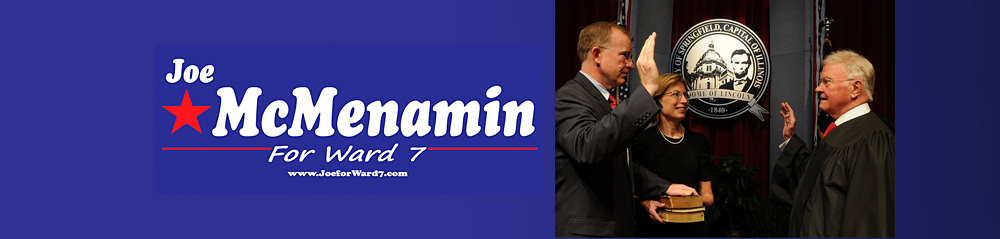
 Joe McMenamin for Ward 7