Jamie Munks
The State Journal-Register
One alderman on Thursday downplayed the need for a City Water, Light and Power electric rate increase, saying he’s “not as worried about a technical default” as the people running the utility. Other Springfield aldermen suggested making temporary a proposal pitched this week to help fix the city-owned utility’s finances by increasing customer charges.
CWLP must come up with a combined $8 million — between increasing revenue and cutting spending — by the end of the fiscal year, Feb. 28, in order to avoid its second technical default in four years. The utility was in default after fiscal 2012, meaning it did not meet its required debt-coverage ratio.
CWLP officials have warned a second default this soon after the first could result in a credit rating downgrade, cancellation of a line of credit and increased scrutiny from credit ratings agencies.
Permanent vs. temporary
In a presentation to the city council Tuesday night, CWLP chief utilities engineer Eric Hobbie offered a package of possibilities that could put the utility in a position to make up its multimillion-dollar shortfall, including a customer charge increase for residential and commercial electric users. In the scenario Hobbie presented, most residential customers would see a $12 increase in customer charges monthly, while elderly residential customers would see a $5 increase.
The CWLP customer charge now is $5.76 per month, which is based on usage of 850 kilowatt-hours. Meanwhile, as of Jan. 1, the customer charge for Ameren is expected to be nearly $19. But because of a larger energy supply charge for CWLP, the utility says its customers’ total energy bills are higher than those of Ameren customers but lower than those of customers of two other local power providers, the Menard Electric Cooperative and the Rural Electric Convenience Cooperative.
***
Not ready to ‘sign on’
With a cooler-than-average July and August and rising fixed and regulatory costs, among other factors, CWLP is facing a major gap between expenses and revenue.
One of the other possible fixes is restructuring the payment in lieu of taxes — called PILOT for short — the utility makes to the city’s corporate fund annually. Hobbie presented a scenario that would see CWLP retain that money and instead institute a 2.76 percent municipal utility tax on all utilities in the city, which would then be funneled into the corporate fund to make up for the loss of the PILOT money.
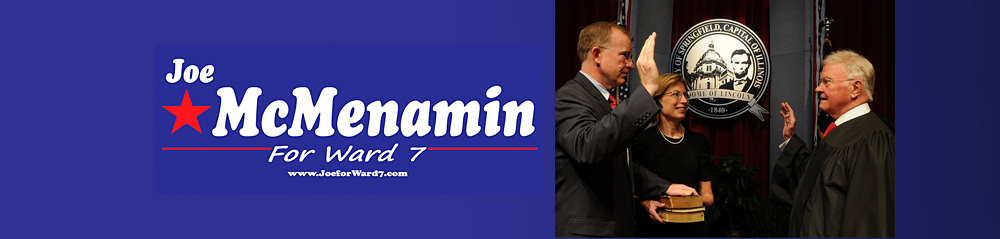
Ward 7 Ald. Joe McMenamin said that while he was still absorbing all of the information Hobbie presented, “I’m open-minded to a temporary customer charge increase through Feb. 28.”
McMenamin said he would then recommend that the newly elected city council re-evaluate the situation. City elections take place April 7, and a number of the 10 aldermen are either stepping down, seeking a different office or facing a challenge in their bid for re-election.
Beyond the weather-related loss of revenue, new carbon emissions regulations the U.S. Environmental Protection Agency rolled out earlier this year will force many coal-fired power plants to either make multimillion-dollar upgrades to come into compliance or shut down.
***
 Joe McMenamin for Ward 7