Bruce Rushton
The Illinois Times
A City Water, Light and Power plan to restructure electrical rates is a recipe for wastefulness, critics say.
The utility has proposed raising fixed meter charges while lowering usage rates as a means of stabilizing finances that can swing significantly with the weather. Residential meter charges would zoom from $5.76 per month to $12.87 per month in 2019. Meanwhile, the cost of electricity would go down so that CWLP would still collect the same amount of money each year but in a more predictable, even fashion.
Customers who use little electricity would pay more under the plan set for city council vote next week. Doug Brown, chief utility engineer, told the council this week that a residential customer who uses 500 kilowatts per month would see a monthly increase of 37 cents. Commercial customers who consume large amounts of electricity would pay less, Brown said.
CWLP says that the change is needed to stabilize the utility’s finances so that more than $500 million in bond debt can be refinanced, which officials figure will save $5 million a year. But critics say that lowering the cost of electricity discourages conservation and isn’t fair to those who have spent money to save energy.
Peter Lazare, a retired senior rate analyst who worked for the Illinois Commerce Commission, says that the city should keep the monthly fixed charge low and raise electric rates.
If revenue isn’t sufficient to meet debt obligations, CWLP on a monthly basis could collect a surcharge from its customer base to satisfy bondholders, Lazare said. Such a practice, called “true up,” is similar to what natural gas companies do periodically to ensure that customers who pay a fixed amount each month ultimately pay the true cost of the energy they consume.
Clark Bullard, a retired University of Illinois engineering professor who once headed the U.S. Department of Energy’s Conservation and Renewable Energy Policy Office, agreed that lowering kilowatt charges isn’t a good idea.
CWLP’s energy sales climbed between the 1980s and mid-2000’s, then leveled off before going into decline, Brown told the council. That’s true of utilities nationwide, Bullard said. Power use peaked in 2007 after doubling every 10 years, he said, and utilities were caught by surprise.
***
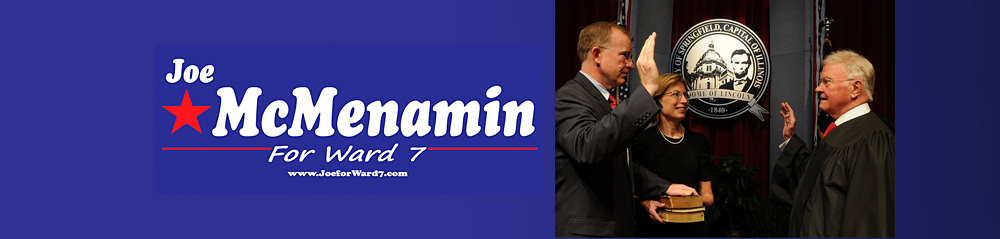
The council this week signaled that it will approve the plan by putting it on the consent portion of Oct. 6 council meeting, which is reserved for items not deemed worthy of debate. However, corporation counsel Jim Zerkle said that a public hearing is required and will be held the same night the council is scheduled to approve the plan. Ward 7 Ald. Joe McMenamin said that he will move for the plan to be placed on the debate portion of the council meeting.
In an interview, McMenamin said that the proposed increase in meter charges is “extreme and unfair.” He said that there has been insufficient analysis and public comment about the plan that the council hadn’t discussed until this week.
“I don’t see any calculation from the utility showing any revenue neutrality from this,” McMenamin said. “I’m also upset by the way this has unfolded without public input.”
 Joe McMenamin for Ward 7