Jamie Munks
The State Journal-Register
City Water, Light and Power is closing in on a window of opportunity over the next month, giving the city-owned utility a shot to smooth out its perpetually rocky electric fund finances, a make-or-break moment that could bring about stability for the future.
Local officials are confident that if several initiatives fall into place between now and Thanksgiving, CWLP’s electric division finances can reverse directions and push toward prosperity. For customers, the changes could mean fewer seasonal peaks and valleys on utility bills and less need to divert tax dollars from other city services to stabilize the utility’s finances.
City officials are pursuing a multipronged approach to steady the electric fund, including:
* Restructuring electric rates to stabilize revenues throughout the year by raising the fixed monthly customer charge and dropping the energy usage rate.
* Signing a new coal contract at a time when prices, which have been at $45 per ton, are dropping. Conservative estimates say the price could drop to $39 per ton, potentially saving $5 million annually.
* Refinancing outstanding debt, which could also save CWLP another $5 million per year.
Moody’s Investors Services last month decided against downgrading the utility’s electric fund bond rating, but it changed its outlook from stable to negative based on a CWLP’s “consistently weak financial position.” The city’s corporate fund — which pays for most day-to-day operations and services — had to bail out the utility’s electric fund after the city fiscal year closed at the end of February.
The ratings agency laid into past city councils and administrations for their “historic unwillingness” to raise electric rates and for politicizing the process. CWLP has missed its debt coverage obligations once in the past four years and received a roughly $3 million bailout earlier this year, narrowly achieving the requirement that it have enough cash on hand to cover 1.25 times its annual debt payments.
Doug Brown, CWLP’s chief utility engineer, said the utility at one point earlier this summer had three days’ worth of cash on hand to pay its bills. Bond ratings agencies suggest that CWLP should have 60 days’ worth of cash — roughly $35 million — on hand to cover operating expenses.
It’s been years since CWLP had that much cash on hand, and projections show the electric fund reaching that level in three to four years if the proposed changes all take place as planned. Right now, the electric fund has about $3.3 million, or about six days’ worth of cash, on hand. The electric fund also owes CWLP’s water fund about $5 million, Brown said.
Brown and Springfield Mayor Jim Langfelder last month laid out a rate restructuring that would raise the base customer charge annually for four years, starting Jan. 1. The monthly usage charge would drop, resulting in lower bills for some customers, particularly large energy users. Residential customers who use less electricity would likely see increases over the four-year period — to the tune of 30 cents to several dollars, depending on several factors — as costs shift as part of the restructuring. The breakdown of how many customers would see increases versus decreases isn’t yet available, CWLP officials said.
If the city council rejects any part of the multifaceted plan, the utility will maintain the status quo, which likely means continued questions about meeting fixed costs at low-revenue times and a struggle to come close to the amount of cash on hand the ratings agencies suggest, Langfelder said.
CWLP customers would also continue to see their bills spike during the summer and winter months when they’re using more heat or air conditioning. The status quo could result in a bond-rating downgrade, which would likely cost the utility some of the projected $5 million in savings through the planned refinancing.
***
How it works
CWLP bills are determined by multiple factors: a fixed customer, or meter, charge; an energy usage rate; and a fuel adjustment, based on changing coal and natural gas prices and the cost of transporting and handling fuel and operating the Dallman power plant scrubbers.
The energy usage rate differs between summer and winter months. If the council passes the rate restructuring, the fixed monthly charge would go up, while the usage rate would drop. Generally, the largest energy users stand to gain the most savings from a lower usage rate.
The fixed customer charge for regular residential users, those who use about 850 kilowatt-hours of electricity in an average month, would increase from the current $5.76 to $8.76 on Jan. 1. Another three increases in subsequent years would see the current charge more than double, topping out at $12.87 in 2019.
Customers 62 and older would see smaller increases over the four years, with the proposal calling for increasing the monthly charge from $5.76 to $7.26 Jan. 1 and winding up at $9.50 in 2019. At the same time, the energy usage rate would drop.
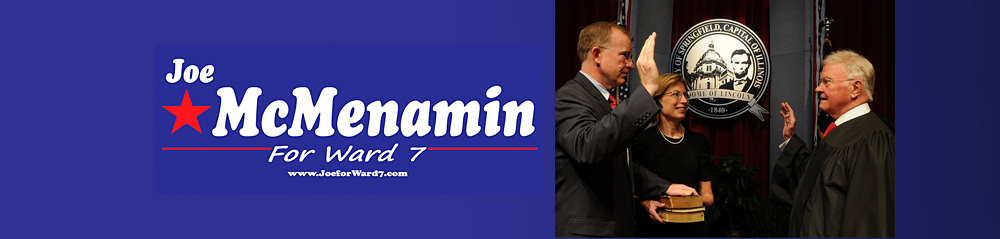
Ward 7 Ald. Joe McMenamin said he thinks one of the appealing things about CWLP’s current rate structure has been the low monthly fixed rate because “low-end users didn’t get hammered with a monthly customer charge.”
***
Narrow window of opportunity
If the council approves the plan, city officials intend to have a more in-depth conversation with Moody’s in following weeks to discuss the changes. City officials hope ratings agencies will view the rate restructuring favorably, improving CWLP’s ratings and resulting in better interest rates for bonds when they’re sold.
The utility should also see substantial savings in 2018 and 2019 with the expiration of two contracts to purchase wind energy, the result of a 10-year agreement with the Sierra Club. Estimates have pegged the annual cost of the wind contracts at roughly $15 million.
At that point, the city can allow the wind contracts to fall off completely or negotiate something “much cheaper,” Brown said.
McMenamin argues that the utility will see savings from declining coal prices and the expiring wind contracts regardless of whether the city council decides to move forward with the rate restructuring. He said he thinks the plan needs more study.
“There’s a lot of moving parts to this,” McMenamin said.
***
 Joe McMenamin for Ward 7