Crystal Thomas
The State Journal Register
For the second year in a row, Springfield aldermen on Tuesday will discuss a 4 percent natural gas tax during its Committee of the Whole meeting.
Mayor Jim Langfelder initially said he would not propose a natural gas tax increase this year after it was voted down by seven aldermen last year. But after hearing concerns from aldermen that he was not “diversifying” the city’s revenue source, Langfelder drafted the ordinance that would institute a city natural gas tax for the first time.
The revenue from the tax would be dedicated to pension payments in its first year and then split between pension and equipment costs every year after. If the city’s reserves are above 12 percent in any one year, the city would pay a pension amount higher than what actuaries recommend.
The tax is projected to bring in $1.2 million to $1.5 million, depending on the price of natural gas and customer usage. The city’s pension payments next budget year is expected to increase by $1.4 million, even after they increased by the same amount this year.
Facing an $11.4 million hole, the city passed a budget last week that had almost $4 million in cuts and raised about $5.5 million in revenue through sales and telecommunication tax increases. The remaining difference was filled in with about $2.5 million from the city’s fund balance.
A natural gas tax increase vote failed 7-3 vote last year. Aldermen who voted for the natural gas last year and are still on the council include Ward 7 Ald. Joe McMenamin and Ward 4 Ald. John Fulgenzi.
During recent budget discussions — before the council’s vote to raise the sales tax last week — McMenamin was one of the aldermen asking for the mayor to rely on revenue beyond the sales tax and to propose a natural gas tax. McMenamin, who voted against the sales tax increase, changed his tune on the gas tax this week.
“We need to diversify our city revenue streams, but I will vote NO on this additional tax revenue from natural gas customers because the mayor has no plan to slow the growth of city pay and benefits,” McMenamin wrote Monday. “We need to address city spending as well as revenue.”
Springfield is one of the only cities of its size in Illinois without a natural gas tax. State law says cities can tax it up to 5 percent. It also allows natural gas companies to charge slightly more than the approved rate to recoup the cost for accounting and remitting the money back to the city.
***
Tuesday’s meeting is at 5:30 p.m. in city council chamber on the third floor of Municipal Center West.
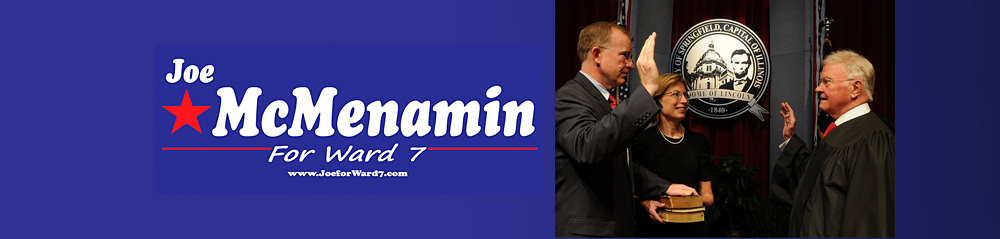
 Joe McMenamin for Ward 7