The State Journal-Register
Thumbs Up: To the Springfield City Council for approving an ordinance that could put more money toward police and fire pensions.
The pension benefits rightly paid to retired police and firefighters continue to eat up a larger share of the city’s revenue; in fact, all of what the city receives in property taxes goes to those funds. Property taxes will no longer provide enough money for the city to meet the required annual payment, which means elected officials will have to dip into other funds.
An ordinance put forward by Mayor Jim Langfelder, and unanimously approved by council members, would put an additional $600,000 payment into the two funds if the city hits a certain threshold of its rainy day fund.
The unfunded liability will not go away. The amount owed increases annually, which naturally means it will require more of the city’s funds to go toward that as well. The city is right to find ways to address the liability, and this is the second such way it has done so since the start of the year. The firefighters union, in their most recent contract, agreed to take the first year’s 2 percent raise as a bonus. That means the firefighters will get the money they are owed, but it won’t be factored toward firefighters’ base salaries. Doing so lowers the city’s pension burden.
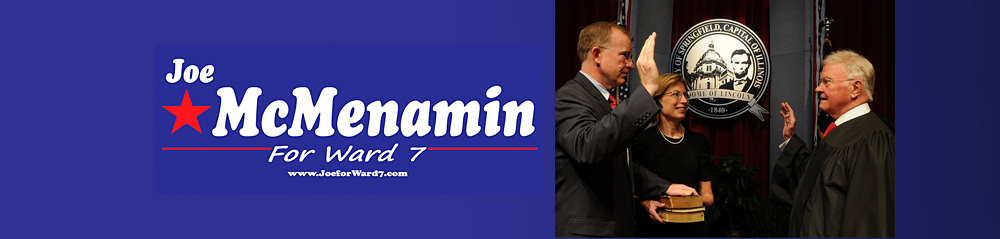
A second ordinance related to pensions, sponsored by Ward 7. Ald. Joe McMenamin, failed on a 9-1 vote this past week. The ordinance would have lowered the city’s assumed rate of return on the city’s pension funds for two years. The adjustments, which would better reflect what the funds generate in reality, would have increased the city’s pension payment by $1.7 million one year and by $3.52 million the next year. The current rate of return is recommended by actuaries.
McMenamin is correct: Overly optimistic assumptions have helped push the city’s pension debt to $350 million. But as aldermen who voted against his ordinance pointed out, it didn’t identify a revenue source for those higher payments. It would mean cuts to other areas or increasing taxes in order to abide by the ordinance.
Our hope is this idea isn’t forgotten, but rather that aldermen continue discussing this proposal to see if a funding source can be found.
***
 Joe McMenamin for Ward 7