Bruce Rushton
The Illinois Times
The pandemic and resultant shutdown of bars, restaurants and other businesses will cost the city of Springfield’s $130 million corporate fund between $6 million and $16 million, city budget director William McCarty figures. Or maybe something else entirely.
“It’s throwing darts,” says McCarty, who has produced estimates of budget hits predicated on the state’s stay-at-home order lasting as long as into mid-summer. The truth, he says, is that no one knows.
“I could come up with 20 or 30 scenarios,” he said. “The problem is, we have very little data at this point in time.”
In Peoria, the city has predicted a budget shortfall as large as $50 million, which likely will lead to layoffs and canceled or delayed public works projects – the city council this month deferred $27.4 million in capital improvements. In Springfield, the city is bracing, with ideas ranging from wait-and-see to layoffs and new taxes.
The big variable, McCarty says, is how long the state’s stay-at-home order, now set to expire on April 30, will last. The governor, who has canceled school through the end of the academic year, hasn’t said. Sales taxes account for a lion’s share of the city budget, and the city won’t know how much tax revenue was generated in March until the state distributes proceeds in June, McCarty said. Beyond sales taxes, hotel-motel tax revenue has sagged. Video gambling revenue, which once brought in $150,000 for public works projects, has dropped to zero since the state shut down gambling terminals.
If there is a plus, it’s the city’s fund balance, which stands at $24 million, McCarty said. The city’s infrastructure fund, which is supposed to be used for street and sidewalk improvements and other public works projects, contains $30 million, and the fund can be tapped to address cash-flow issues so long as the money is paid back, he said.
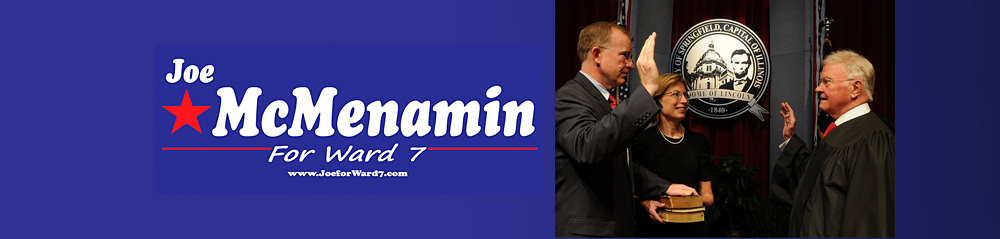
Ward 7 Ald. Joe McMenamin says that the city should consider layoffs and a temporary gasoline tax. City hall is closed to the public, the library is shuttered, tourism has stopped and parking enforcement has ended, so the city should review which positions aren’t needed, the alderman said. “I think we need to review which employees have ongoing duties and which do not,” McMenamin said.
With gas prices dropping below $1.50 a gallon, McMenamin adds that the city should consider a tax that would disappear when the price of fuel reaches $2 a gallon. “That would be a good, temporary source of revenue,” the alderman said.
***
 Joe McMenamin for Ward 7