Steven Spearie
The State Journal-Register
The COVID-19 pandemic and dire projections of revenue shortfalls gave most people around the city of Springfield dealing with the fiscal year 2022 budget some sleepless nights, including Ward 8 Ald. Erin Conley.
“The words ‘unprecedented times’ get thrown around a lot, but it’s true,” Conley said. “We’ve managed our way through this. We’re in a decent position right now to start looking to the future and how we want to see our community recover from this pandemic.”
The $130 million balanced corporate fund budget includes no layoffs or furloughs while not cutting back on any city services.
The committee of the whole meeting, which begins at 5:30 p.m. Tuesday, will give residents a chance to comment on the proposed budget covering the fiscal year that begins March 1. A special city council meeting will follow to vote on the proposed budget.
Both meetings will take place in council chambers, 300 S. Seventh St. Room capacity is limited to 50 people, but the meetings will be broadcast live on Comcast Cable Channel 18
Expected to get scrutiny are the lingering effects of the pandemic and how the city will move forward with services, a proposal to relocate three fire department firehouses, police and fire pensions, public safety manning and overtime, and the fate of Dallman Unit 33.
The road to FY22
One of the ironies of dealing with the COVID-19 pandemic, said Mayor Jim Langfelder, is that fiscal year 2021 had begun just weeks prior. Almost immediately, there were directives from Langfelder and other department heads about belt-tightening.
The city was able to save over $2 million, said city budget director Bill McCarty, by delaying hires and other initiatives.
The city received $4.8 million through the federal coronavirus relief bill, and a June rebound financially, underscored by a “Local First” message, helped smooth things, Langfelder said.
The budget office had been doing work “years in advance” getting the city’s fund balance — its reserves — up and ready for such a downturn, McCarty added. The city has a fund balance of just over $29 million, or 22.8% of expenses.
The city is utilizing $3 million of fund balance as a resource to balance the budget, not a shock to anyone, McCarty said, because revenues were impacted by the pandemic, though not so stridently as once expected.
“We’re looking at $4-$4.5 million down in revenue versus what could have been much, much worse, quite frankly,” McCarty said.
Some of those early projections were in the $12 million range, he acknowledged.
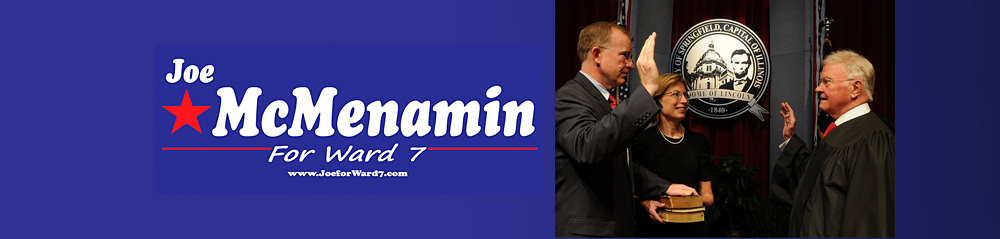
“Our revenue was stronger than we expected, so that’s positive news,” said Ward 7 Ald. Joe McMenamin. “We did have some cost containment.”
Police and fire pensions
For the first time, the city’s obligation to cover police and fire pensions has spiked to over $2 million.
To put that in perspective, McCarty said 10 to 15 years ago, the city’s property taxes covered the entirety of police and fire pension obligations as well as other items, like debt service, some library costs and some Illinois Municipal Retirement Fund pension expenses.
“It started consuming more and more and more and crowding out these other things, to the point it was only police and fire (pensions being covered by property taxes),” he said.
The city, Langfelder said, has been in discussions with Gov. JB Pritzker’s office about pushing out the ramp, the full funding of police and fire pensions, from 2040 to 2050. That would help with the cash flow and pressure exerted on the city, Langfelder added.
“That 10 extra years makes a big difference, but that takes legislative action,” he said.
Ward 10 Ald. Ralph Hanauer said it is the state that needs to take the lead in moving out the ramp.
Conley agreed.
“Director McCarty compared it to a 30-year mortgage as opposed to a 10-year mortgage,” she said. “Yes, we need to make that obligation. Absolutely, it’s important that we have those pension funds in there, but if there can be some concessions made at the state level for how those payments are made, I think that would take a lot of immediate stress off the city.”
McMenamin, though, has insisted that the city needs to find new streams of revenue to address the shortfall. McMenamin’s call for a study to address the matter didn’t advance, and the issue led to the alderman calling for McCarty’s resignation a little over a year ago.
“(Other aldermen are) trying to pretend the problem doesn’t exist, from what I can tell, and that no action is needed, and I got no support from budget director McCarty,” McMenamin said. “It’s also unfair to future generations because it takes away services from (them).”
***
 Joe McMenamin for Ward 7